
How a Genesee County Property Search Works
record details
- record details]
- record details
- record details
- record details
- record details
What a Genesee County Property Record Shows
record details
| Owner of Record | record details |
|---|---|
| Situs / Mailing Address | record details |
| Parcel Number (APN) | record details |
| Assessed / Market Value | record details |
| Legal Description | record details |
| Last Sale | record details |
record details
Search by Address, Owner, or Parcel
record details
| Search Key | Best For | Where It Works | Watch Out |
|---|---|---|---|
| Address | record details | record details | record details |
| Owner name | record details | record details | record details |
| Parcel number | record details | record details | record details |
Not a title search. record details
Begin the Genesee Property Search
Start a Genesee County property search in PROS. Choose the municipality. Type the street address. Quick Search suits a direct address or owner query. Advanced Search earns its keep when names repeat or parcels look alike. Write down the SBL, situs address, owner field, roll year, and municipality before moving to any other system. One caution: a Batavia mailing label will not tell you where the land sits. It may be in the City or the Town of Batavia.
Next, put Parcel History, SearchIQS, eTAX, and the county map sheet side by side. Each tool answers a different question about the same parcel. Parcel History links tax-map clues to deed clues. SearchIQS supplies recorded instruments. eTAX adds bill context, and the parcel map shows the tax-map setting.
- Choose the city or town in PROS.
- Search the normalized street address.
- Save the SBL and roll status.
- Confirm the latest deed book and page.
- Date every result used.
Genesee Search Fields Compared
Address, owner, and parcel searches in Genesee County are not interchangeable tools. An address search works best when you already know the site. Owner search may surface several parcels at once. Names can be abbreviated or held by an entity, though. The SBL is the strongest cross-system key. It joins rolls, parcel reports, and map sheets even when street text changes.
| Method | Strongest use | Main caution |
|---|---|---|
| Address | Locate a present site | Situs differs from mailing address |
| Owner | Find roll entries by name | Trust, estate, and LLC forms vary |
| SBL | Cross-check county systems | Splits and mergers create related numbers |
PROS Results in Genesee County
A PROS result can reveal parcel identity and owner and mailing fields. It also shows property class, assessment, inventory, and comparable-sale material. Read the field label and the roll date carefully. The owner field is an assessment record, not a certified statement of title. Comparable sales are administrative research aids, not a parcel appraisal.
The official PROS portal shows its live Quick and Advanced Search choices. These identify the correct Genesee County property search interface.
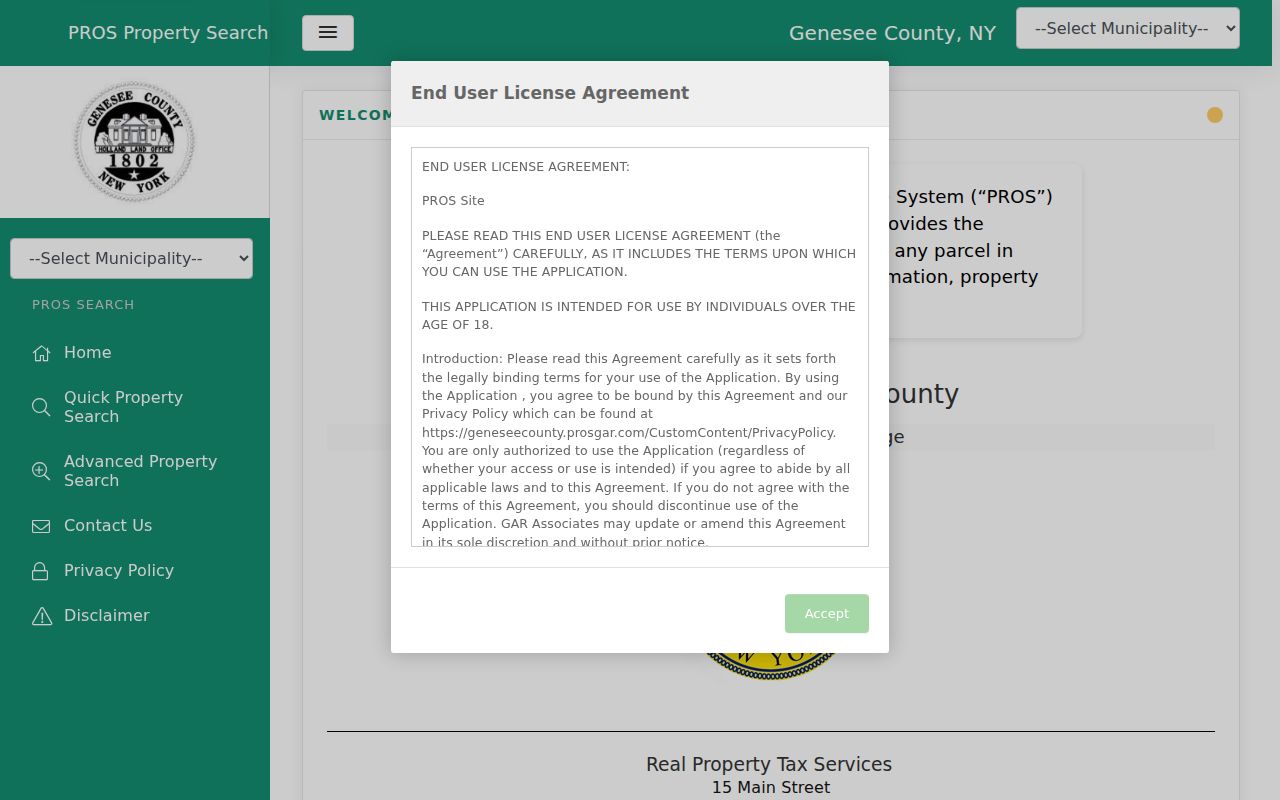
Return to the live portal for current fields, roll data, and municipality options.
Parcel History Search Clues
The Parcel History Database accepts tax-map, deed, and address clues. Its reports can bridge a present parcel to earlier references. County material describes the database as updated weekly. That schedule does not mean PROS tax detail, a tentative roll, and a newly recorded deed all change together. That schedule does not mean PROS tax detail, a tentative roll, and a newly recorded deed all change together.
Use the merged-parcel controls when a historic SBL no longer returns the land you expect. A successor parcel may carry the current assessment while an older deed still refers to the larger parent tract. A successor parcel may carry the current assessment. An older deed may still refer to the larger parent tract. Keep every related SBL until the legal descriptions explain the change.
City and Town Search Split
"Batavia" is the most important local search trap. Genesee County has one incorporated city, the City of Batavia. It also has a Town of Batavia. These are separate assessment jurisdictions. Select the correct municipality. Note the SWIS context instead of trusting a ZIP code or postal city name.
The City assessment page publishes city rolls, valid sales, and inventory material. Town parcels stay on the appropriate town roll. The location may stay unclear. The county local-assessor roster and the parcel-map index will resolve it.
From Roll to Recorded Deed
Many roll entries provide a deed book and page. That reference acts as a bridge into SearchIQS. Search the cited reference. Confirm the grantee and grantor. Compare the legal description with the subject SBL. For modern deeds, Genesee SearchIQS reports index and image coverage from 1984 forward.
Older work follows different paths. Deed index books cover 1802 through 1983, while record-book images run from 1881 through 1984. An index-only hit can still be valid even when no modern image button appears. The County Clerk is the fallback. It handles manual books, copies, and help identifying the right volume.
Tax and Map Follow-Up
eTAX offers owner, address, mailing-address, and ID search modes for town and county tax inquiries. A tax result explains a bill or payment context. It does not settle ownership. Match it to the SBL and roll year. Follow the portal's payment cautions before acting on a balance.
County parcel-map PDFs add roads, streams, rail lines, acreage, common-owner marks, easements, and district context. Remember that these graphics are tax maps. Exact boundary work calls for the deed and a recorded plat. It often needs a licensed survey too.
Old Addresses and New Parcels
The County History Department's 1958 house-numbering map can turn an old directory address into a lead. The same map can do the same for a newspaper address. It becomes a modern search lead. Its other map holdings include 1829 and 1915 material. Test the old number, street, and owner name against current Parcel History and PROS. Do not force an exact address match.
Richmond Memorial Library directories and newspapers can identify an earlier resident or a sale notice. Only a deed confirms conveyance. The library's cited county assessment and tax-roll run from 1838 through 1979. These exclude the City of Batavia. City research therefore needs city rolls and other city-specific sources.
Entities and Estate Owners
An LLC, trust, estate, or joint ownership can appear differently across Genesee County systems. Search the exact entity name and sensible variants. When an organization is involved, the New York Corporation and Business Entity Database can help. It supplies status and service details. Business data can clarify a name, but it does not replace the recorded deed.
Estate files route through Genesee County Surrogate's Court. A probate file may explain authority. A later fiduciary deed documents the land transfer itself. A decedent's name or court filing is not proof that a conveyance occurred.
Limits of a Property Search
A Genesee County property search can connect a parcel to assessment and deed records. It also surfaces map, tax, and permit leads. But it cannot prove who occupies a home or settle a boundary. It cannot disclose beneficial ownership in every entity either. Title clarity is never guaranteed by a search. Save a dated snapshot and verify critical facts with the custodian.
Lawful research only. Public owner data supports property diligence, estate work, tax review, and history, never harassment or targeting.
Genesee Search Fallback Routes
When an online search stalls, switch channels before concluding a record does not exist. The local assessor can confirm the municipality and roll entry. Real Property staff can help with the parcel map and SBL. Older deed volumes and copies are available at the County Clerk counter or by mail. For a historic address, County History maps are the right places to look. Richmond Memorial Library directories help too.
A good request contains the site address and any former address. It should also list the municipality and the SBL. Add the owner of record's name exactly as shown, the record type, and a date range. Those details keep staff from confusing the City of Batavia with the Town. They also prevent searching the wrong series. Under New York FOIL, describe the agency record you want in reasonable terms. Do not pose a broad research question.
Courts run on their own access rules. Estate records sit with Surrogate's Court. eCourts may offer only an index or a case status, not every document image. When the real question is whether land was conveyed, return to the deed index.
Document a Search Result
A screenshot alone is not enough. Write down the source title, URL, municipality, and SBL. Include the search method, the roll or document date, and the date you accessed it. Note the exact name form if a result came from an owner-name query. Preserve the book and page or instrument number if it came from a deed citation.
This audit trail earns its keep when sources disagree. It can show that a tentative roll preceded a recorded sale. It can show that Parcel History carried a different update date, or that a map sheet predated a subdivision. It also makes a later correction easy to check.
Report uncertainty plainly. Say the roll listed a name on a given date, not that the person holds clear title or lives there. Say a map depicted a line, not that a survey fixed it on the ground.
Complete the Genesee Search
Before calling a Genesee County property search complete, compare the site address with the owner mailing address. Verify the municipality too. Make sure every opened record carries the same SBL or a documented predecessor. Check whether the roll is tentative or final. Also check whether the map sheet predates a parcel change. Read the latest deed's legal description, not just its index row. For tax questions, rely on the live eTAX record. For building work, the City office covers only land within its authority. State contradictions rather than blending them. A short conclusion listing official sources and dates beats a broad claim about ownership, value, or boundaries.
Search Date Matters
Repeat the Genesee County property search close to any important decision. A later deed, final roll, merged parcel, corrected address, or tax update can change the answer. Keep the earlier snapshot for comparison, but cite the newest source as the current finding.